The short answer
George Washington Gale Ferris Jr. — with a record worth reading.
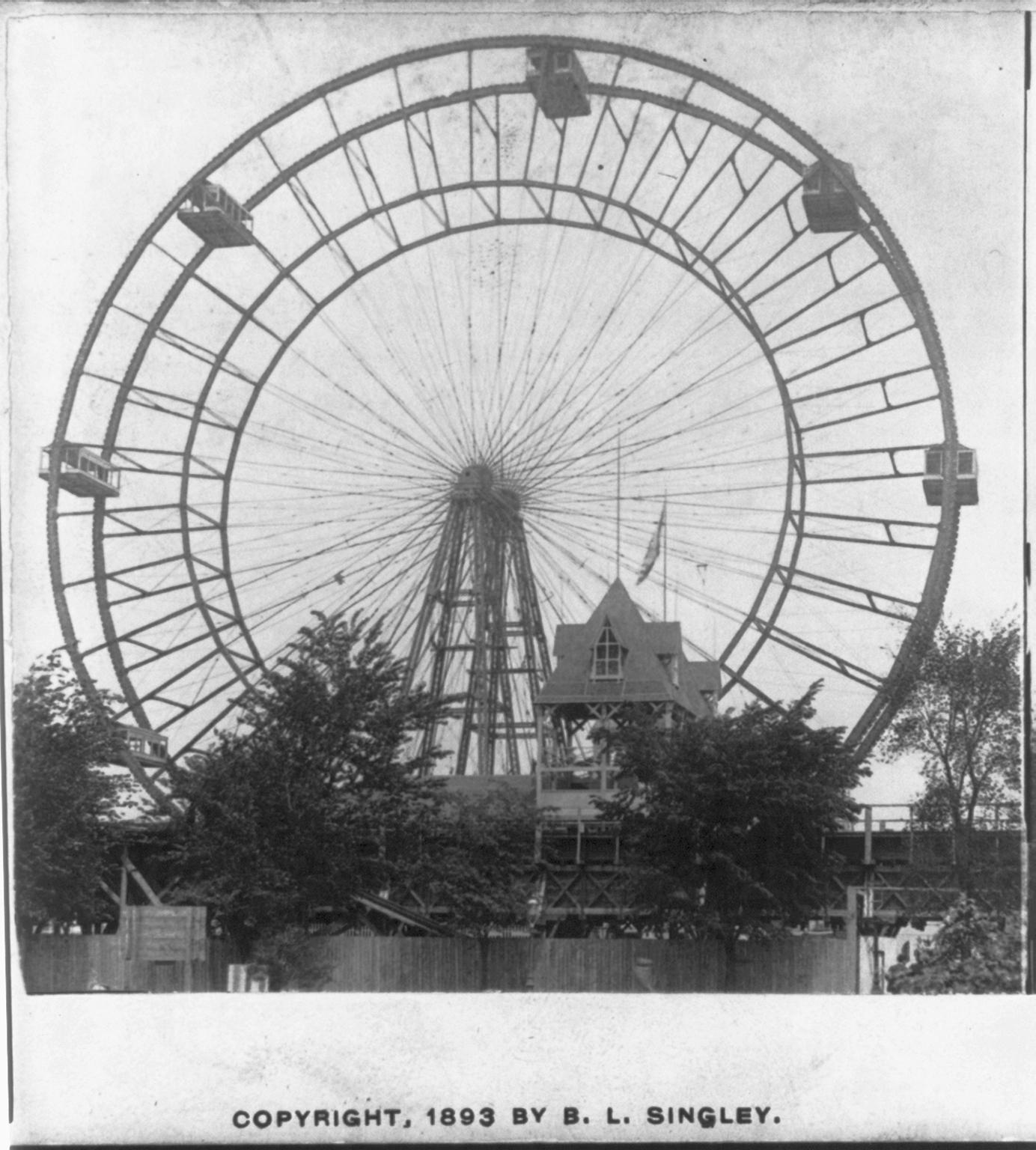
George Washington Gale Ferris Jr. (1859–1896), a Pittsburgh civil engineer, designed and built the great observation wheel for Chicago’s World’s Columbian Exposition. It turned for the first time at six o’clock on the evening of 9 June 1893 and opened to the public on 21 June.[2, p. 85][2, pp. 88–92][20][21, p. 2, 'The Triumph of Engineering'][22, p. 1, 'The Wheel Goes Round'][23, p. 5]It was 250 feet in diameter and rose about 264 feet above the Midway Plaisance — Engineering News said so in July 1893 — and it is the machine that gave every later wheel its name.[2, p. 74][2, p. 86][2, p. 84][16, p. 8][17][18, p. 5][19]
That is the answer. This page exists because the record around it is better than the legend: smaller wheels existed before his, a patent suit was served the day after his opened, a rival claim surfaced in the newspapers during that suit, and Ferris never patented the machine that made his name. His complete life is on George Washington Gale Ferris Jr.; the whole story of the wheel is on The History of the Ferris Wheel. This page is about the question of invention.
The engineer
A bridge man, not an amusement man.
Ferris was born in Galesburg, Illinois, on 14 February 1859 (the family record also preserves a variant of 16 February) and graduated in civil engineering from Rensselaer Polytechnic Institute in 1881.[2, p. 60][2, p. 48][2, p. 125][7, Item 8, Statement of Significance][7, Item 8][8, pp. 515–516][9, pp. 32–34][10]In 1886, aged twenty-seven, he founded G. W. G. Ferris and Company, Consulting and Inspecting Engineers, in Pittsburgh, to test and inspect steel and other metals for large structures.[2, p. 55][7, Item 8][8, pp. 515–516][9, pp. 32–34]Weingardt places his Chicago office in the Rookery Building and describes his firm, alongside Robert W. Hunt’s, inspecting steel for the fair’s buildings.[2, pp. 67–68, 70][2, p. 78]
That background is the point. The wheel he proposed was built like a bridge: a steel tension wheel on the bicycle-wheel principle, its rim carried by rods in tension rather than by rigid spokes in compression. Rice gives the rods as 2-9/16 inches; Weingardt, and the 18 June Tribune, give 2½ inches.[1, p. 477][2, p. 74][2, p. 107][14, p. 25][15, pp. 615–616]How that structure was designed and raised is on Building the Wheel and Engineering the 1893 Wheel.
Why he built it
Burnham’s challenge.
Luther Rice’s 1901 account places Daniel H. Burnham’s challenge at an engineers’ luncheon early in 1891: American engineers had contributed nothing novel to the coming exposition, and Burnham wanted something to rival the Eiffel Tower — not a tower. The Carson City nomination gives 1892.[1, pp. 475–480][2, pp. 70–72]
How the idea came to Ferris has two tellings, and this site keeps both. Luther Rice’s 1901 recollection has Ferris sketching the wheel at a dinner with friends; Ferris himself, in 1893 newspaper interviews, said he sketched the plan at a Chicago chop-house lunch.[1, pp. 475–480][2, p. 74][5, p. 2, 'The Great Ferris Wheel'][6, p. 2]The two may describe one evening or two; they are not collapsed into the more cinematic version.
Before 1893
Wheels that already existed.
Ferris did not invent the idea of a revolving passenger wheel, and he did not claim to. In his 1893 deposition, as quoted by Weingardt, Ferris said he had ridden a small wooden wheel at Atlantic City in September 1890 without knowing it was a Somers wheel.[2, p. 65][3][4]William Somers’s U.S. Patent 489,238, filed 28 October 1891 and issued 3 January 1893, describes a wooden-rim roundabout with radial spokes, swinging seats, and a cable drive in grooves on the rim — the patent later asserted against Ferris.[2, pp. 93–94, 107][11][12]
The distinction the record supports is one of kind. The Somers machines were small wooden roundabouts. What Ferris built was a steel tension wheel 250 feet in diameter, engineered like a bridge.[1, p. 477][2, p. 74][2, p. 107][2, p. 86][2, p. 84][14, p. 25][15, pp. 615–616][16, p. 8][17][18, p. 5][19]Later amusement wheels borrowed the name: Weingardt traces the first imitations to Basset’s great wheels in London, Blackpool, Vienna and Paris, and to Sullivan’s portable wheels from Jacksonville, Illinois.[2, pp. 96, 105, 109–110, 121]
Weingardt reports the Tribune’s October 1893 story on George Baird of Minneapolis, who claimed to have proposed a far larger passenger wheel for the fair in 1889, and its bearing on the patent suit.[2, pp. 99–100]A claim reported in a newspaper during active litigation is evidence that the question of origins was live at the time. It is not a wheel: nothing on Baird’s proposal was built.
The suit
Served the day after the opening — and not resolved here.
Weingardt records the Garden City Observation Wheel Company’s patent suit being served the day after the Wheel opened, with Ferris’s first deposition on 10 July 1893. A matching National Archives file (NAID 235900749) has been located and not read; the service date is not independently confirmed.[2, pp. 93–94][3][4]
Weingardt has the suit dismissed on 3 July 1894 with $26.50 costs to Ferris, and states that Ferris never patented the Wheel. A 23 November 1893 New Jersey paper reported that the highest court had found infringement and royalties due. The case file has been located and not read; the outcome stays in dispute.[2, p. 107][2, p. 96][3][4][13, p. 3]
After him
The name outlived the machine.
Ferris died of typhoid fever at Mercy Hospital, Pittsburgh, on 22 November 1896, aged 37. (The family record gives 28 November, the date of the trade-journal issue that carried his obituary; every other source read gives the 22nd.)[2, pp. 111–112][7, Item 8][9, pp. 32–34][24, p. 1][25, p. 3 (dateline Pittsburg, 22 Nov.)][26, p. 6][27][28]The Wheel itself outlived him by a decade. Its later years on North Clark Street, its last season in St. Louis, its demolition and the unresolved fate of its great axle are on What Happened to the Original Ferris Wheel.
Rensselaer conceived its Alumni Hall of Fame in 1995 and inducted Ferris in that inaugural class in September 1998. Weingardt (p. 125) gives 1995 as the induction year; the correction stays on the record.[2, p. 125][29]
FAQ
The question, in short form.
Who invented the Ferris wheel?
George Washington Gale Ferris Jr., a Pittsburgh civil engineer, designed and built the great steel observation wheel for Chicago’s World’s Columbian Exposition. It turned for the first time on the evening of 9 June 1893 and opened to the public on 21 June. Smaller wooden pleasure wheels already existed: in his 1893 deposition, as quoted by Weingardt, Ferris said he had ridden one at Atlantic City in September 1890. His was a 250-foot steel tension wheel, and it is the machine that gave every later wheel its name.[1, p. 477][2, p. 85][2, pp. 88–92][2, p. 65][2, p. 74][2, p. 86][2, p. 84][2, p. 107][3][4][14, p. 25][15, pp. 615–616][16, p. 8][17][18, p. 5][19][20][21, p. 2, 'The Triumph of Engineering'][22, p. 1, 'The Wheel Goes Round'][23, p. 5]
Did George Ferris patent the Ferris wheel?
No. Weingardt states that Ferris never patented the Wheel. The patent litigated around it was not his: William Somers’s U.S. Patent 489,238, issued 3 January 1893, was asserted against him by the Garden City Observation Wheel Company. Weingardt has that suit dismissed on 3 July 1894 with $26.50 costs to Ferris, while a 23 November 1893 New Jersey paper reported that the highest court had found infringement and royalties due. The case file has been located and not read, so the outcome stays in dispute.[2, p. 107][2, p. 96][2, pp. 93–94, 107][3][4][11][12][13, p. 3]
Were there Ferris wheels before 1893?
There were smaller wooden pleasure wheels, but nothing like the 1893 machine. In his 1893 deposition, as quoted by Weingardt, Ferris said he had ridden a small wooden wheel at Atlantic City in September 1890 without knowing it was a Somers wheel. Somers’s patent describes a wooden-rim roundabout with radial spokes, swinging seats, and a cable drive in grooves on the rim. What Ferris built was a steel tension wheel on the scale of a bridge.[1, p. 477][2, p. 65][2, pp. 93–94, 107][2, p. 74][2, p. 107][3][4][11][12][14, p. 25][15, pp. 615–616]
What happened to George Washington Gale Ferris Jr.?
He died of typhoid fever at Mercy Hospital, Pittsburgh, on 22 November 1896, aged 37. The family record gives 28 November, the date of the trade-journal issue that carried his obituary; every other source read gives the 22nd.[2, pp. 111–112][7, Item 8][9, pp. 32–34][24, p. 1][25, p. 3 (dateline Pittsburg, 22 Nov.)][26, p. 6][27][28]