Two layers
A public summary over a private archive.
Underneath this site is a private research archive: four large compilations assembled over decades by James G. Ferris (1942–2025), the engineer’s great-great-nephew, indexed record by record and searchable by registered readers. The archive is the record. The public pages are a curated, cited reading of it, extended with outside primary sources and scholarship where the family record is thin — as it is, deliberately, on the Wheel itself.
The compiler said plainly what his work was. He introduced three of the four collections with the same sentence: it is “a compilation of information from printed and individual sources” and he “made no attempt to verify the information received from individual sources.” This site takes him at his word. Nothing is treated as a fact because it appears in the archive; the archive tells us where to look.
The generated answers the archive gives registered readers are never the evidence either. When a history page cites the family archive, it cites a specific collection and record, and a reader who registers can open that record in full and judge it.
Source hierarchy
Where the evidence comes from, in order of preference.
When sources of different kinds support the same statement, the pages prefer them in this order:
- Contemporary primary documents — newspapers, engineering journals, pamphlets, letters, patents, census and probate records from the period itself.
- Original archive and collection material — catalogued items and finding aids at libraries, museums and archives; the family collections cited by record.
- Institutions — a museum, university, or government body speaking for its own holdings or history.
- Historical scholarship — published research, cited to the page.
- Reputable secondary sources — encyclopedias and established reference sites, used as leads and never as the last word.
- Unsourced family assertion — stated on a page only when it is identified as exactly that.
Scholarship is cited by page, not by title alone. Where a book led the research to a contemporary source that was then found and read, the page cites the contemporary source and the internal ledger keeps the chain that got there. Facts are paraphrased; quotation is rare and short.
The claim ledger
How a claim becomes a sentence.
Behind each history page is a ledger of claims. A claim is one sentence in the editor’s words, tied to one or more supports, each naming a source and where in it the statement sits. The ledger records who first surfaced the claim, whether someone here independently read a primary or institutional source for it, what other sources say when they disagree, and whether the claim may appear publicly at all. The numbered source list at the foot of each page is generated from that ledger, in order of first use, so the sources a reader sees are exactly the sources the page rests on.
The confidence vocabulary
- Established. The cited source itself states it, someone here has read that source, and nothing found contradicts it.
- Probable. Strongly supported, but resting on one source or on inference from documents rather than a direct statement.
- Reported. A secondary or family source says so; the primary evidence has not been seen.
- Disputed. Sources disagree and the disagreement is unresolved. The page says who says what.
- Family tradition. The compiler or the family says so without documentation, and the page says that is all it is.
A disputed or unverified claim can still be published, but only in wording that carries its status: the page names the sources on each side rather than picking a winner. That is why some sentences on this site read “the family record gives…” or “most published accounts say…” rather than simply asserting.
Disagreement
What the site does when the record argues with itself.
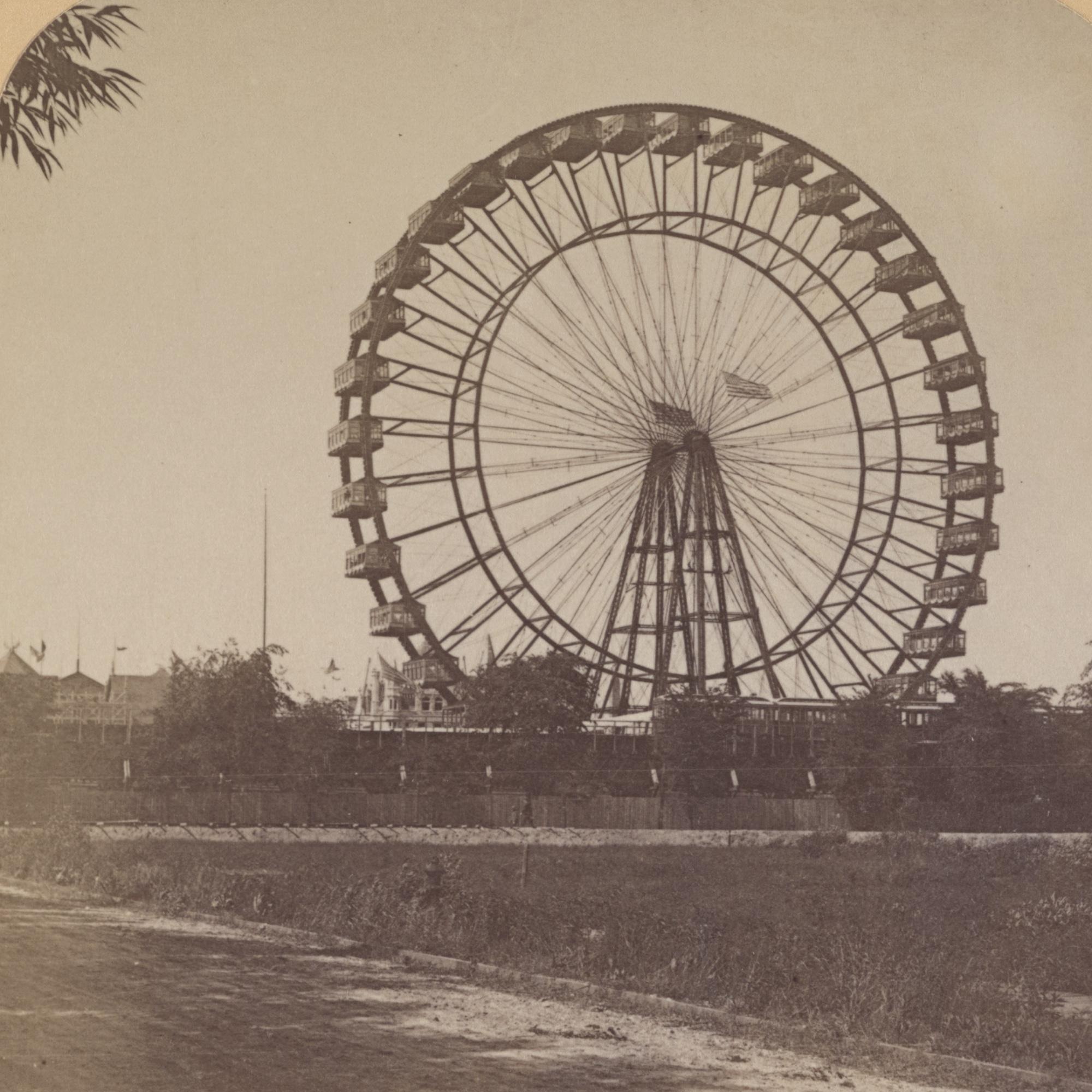
The record does argue. The Wheel’s height is given as 250 feet in some accounts and 264 in others, usually because one describes the diameter of the wheel and the other its height above the ground; the pages carry both until a contemporary engineering source settles the usage. The family record gives George Ferris’s death as 28 November 1896 while most published accounts and this site’s own earlier pages give 22 November; the person page states the disagreement and what each side rests on. The compiler himself struck through one generation of the family’s descent from the immigrant Jeffrey Ferris with the note that it had “been questioned so many times” he was deleting it, and the family pages say so.
The rule is simple: identify the conflict, look for stronger evidence, and if none resolves it, preserve the uncertainty in the public text. A confident sentence that hides a disagreement is a worse page than a careful one that shows it.
People and privacy
Historical people are published. Living people are not.
The family collections run from seventeenth-century Connecticut into the present. The public pages concern people who are part of the historical record: the engineer, his parents and siblings, the Galesburg and Carson City generations, and the people who built and ran the Wheel. Living relatives, recent deaths, addresses, contact details, and personal circumstances that have no bearing on the history stay in the archive, where access is registered, quota-limited, and one record at a time. The family stewardship described on the family page names living people only with their consent.
Rights
Possession is not permission.
Photographs on these pages come from the Library of Congress and other collections whose rights statements are shown beside each image. Documents and transcriptions in the family archive were gathered from many publishers; the pages paraphrase them rather than reproduce them. Copyrighted scholarship is cited by page and never copied. Family photographs held in the archive are not published.
Using this work
How to cite these pages, and how to correct them.
Cite a history page by its title, “Ferris Wheel Heritage,” the page address, and the date you read it, then follow the page’s own numbered sources to the underlying evidence — the underlying source is always the better citation. If you find an error, the correction channel described on the privacy and corrections page is the route; that page also says honestly what is not yet open. Serious researchers are welcome in the archive itself.